
MIND & BODY
SPEED
thrills
In the second part of a two-issue series GAVIN GROVES tells us that as we move from the dry winter months into summer the ball doesn't seem to go as far
DR KIRSTEN VAN HEERDEN
Part 1
last month we discussed SHAKING off THE RUST
REad IT HERE

Our winter fairways can become firm and fast inland, giving the ball plenty of run after it lands. Come summer, warmer and wetter conditions soften the fairways and that run disappears. A golf ball that is still airborne is moving forward, thus carry distance can have a large impact on your total driving distance. A golf ball rolling on the ground is at the mercy of friction and thus slowing down much more.
There is a funny one-liner people sometimes say on the tee box: 'Hard equals far!' Of course they are referring to swinging harder to hit the ball further, but perhaps the better question is: 'How can I fly the ball further?'
If you want to hit the ball further, the answer isn't necessarily more effort. There are several pieces to the puzzle: your physical capabilities, your ability to create speed, your swing technique and whether your equipment is helping you optimise that speed.
Strength is only the beginning
Strength is an important part of the equation, but being strong doesn't automatically mean you will swing a golf club faster. A simple way to look at it is:
Strength → Power → Speed
Strength is your ability to produce force. Power is your ability to produce that force quickly. Speed is your ability to move the club rapidly through the hitting area.
This is an important distinction in golf. You can have a golfer who is very strong in the gym but doesn't necessarily produce much clubhead speed because they haven't learned to express that strength quickly or transfer it efficiently into their golf swing. This is one of the reasons the Titleist Performance Institute (TPI) places an emphasis on testing and developing the physical qualities that contribute to power and speed, rather than simply trying to make every golfer stronger.

Golf is Good for Your Wellbeing: Every Conversation Counts
Golf is about far more than the scorecard.
Every round offers an opportunity to enjoy the outdoors, stay active and connect with others – all of which support positive mental well-being. October is Mental Health Awareness Month, so take a moment to check in with your playing partners.
A simple "How are you doing?" or inviting someone to join your fourball can make a meaningful difference.
Strong golf clubs are built on friendship, belonging and looking out for one another. Discover practical resources, conversation tips and inspiring stories at www.healthyminds.golf, and help make your golf club a place where everyone feels welcome, supported and connected.
Don't just lift heavier
Strength training should have a place in a golfer's programme, particularly if there is a strength deficit. Squats, split squats, deadlift variations, pressing and pulling exercises can all help develop the physical foundation required to produce force.
But eventually we need to ask a different question: Can you use that strength quickly? This is where power training comes in.
Exercises can teach the body to produce force at a much higher rate. The goal isn't simply to move a heavy weight. The goal is to teach your body to move with intent and speed such as:
- Medicine ball throws
- Rotational medicine ball throws
- Jumps
- Explosive step-ups
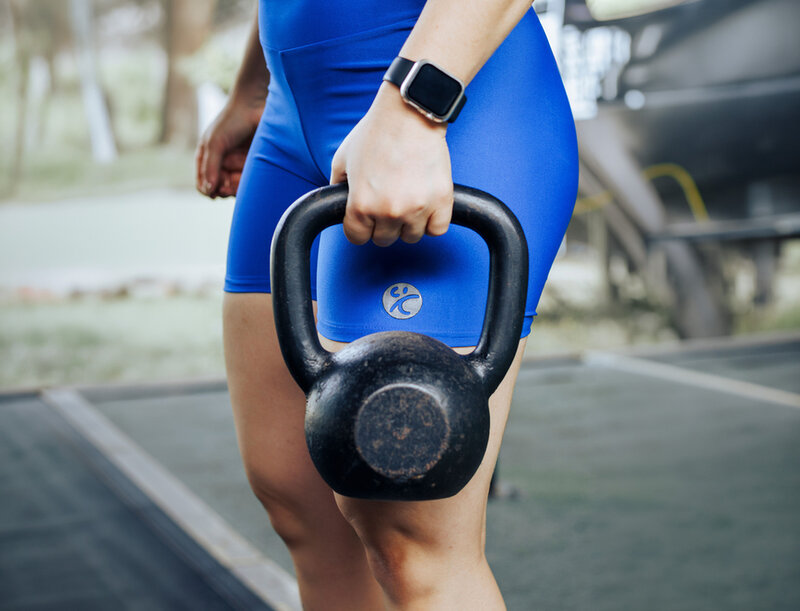
- Kettlebell movements
- Other appropriately selected explosive exercises
Golf is a rotational sport – but don't forget the ground
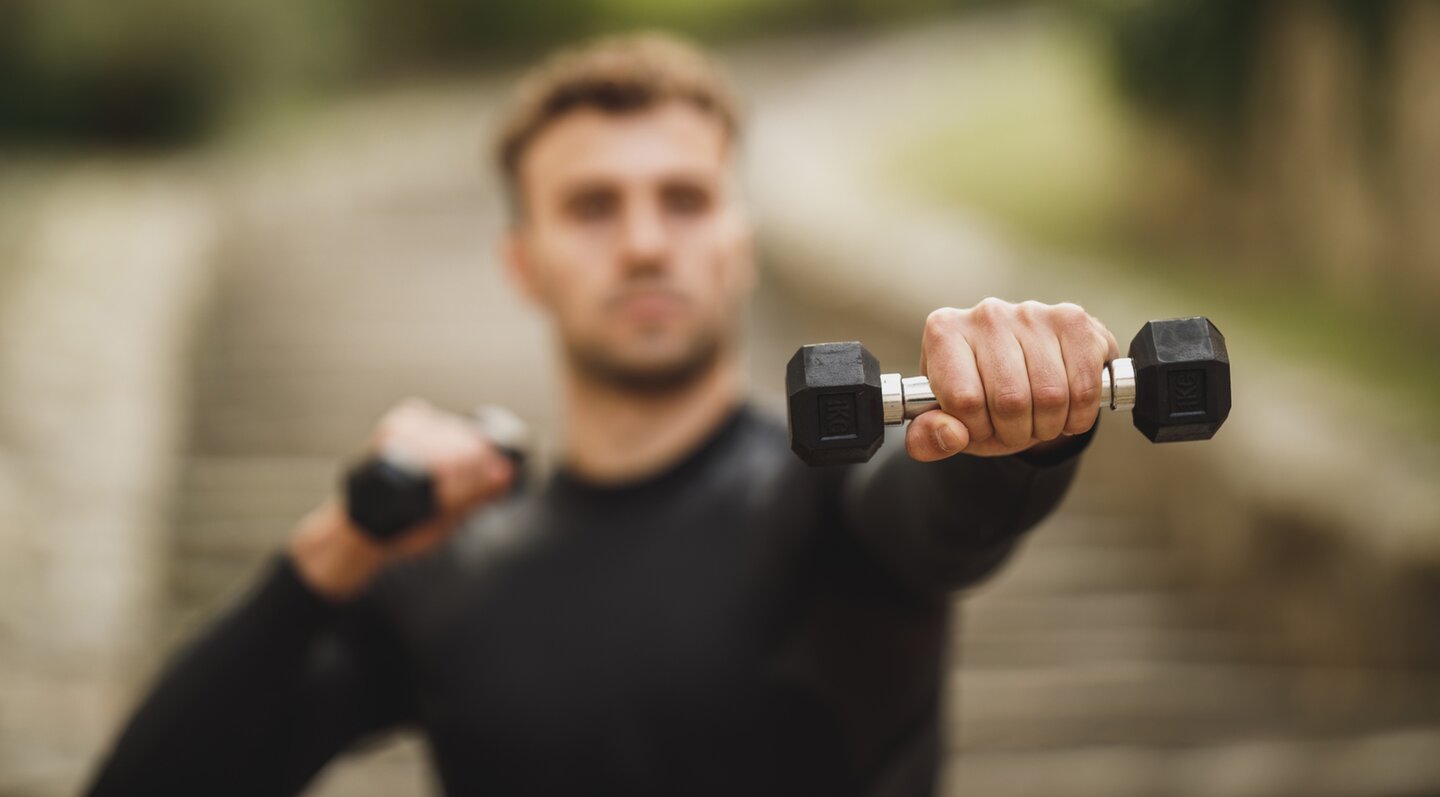
One of the biggest misconceptions about creating speed in the golf swing is that it comes primarily from the arms. The golf swing is a co-ordinated movement involving the entire body.
The lower body interacts with the ground, the pelvis and torso rotate and sequence, the arms and hands contribute to the final acceleration, and ultimately that energy has to be transferred efficiently into the club. This is why simply trying to 'swing harder' can often have the opposite effect. More effort can create more tension, which can disrupt sequencing and actually reduce the speed of the clubhead.
Don't forget the golf swing
Fitness can give you the physical capacity to create speed, but you still have to know how to use it. This is where working with a good golf coach becomes important.
A technically efficient swing can make better use of the speed you already have. Changes to sequencing, delivery, strike and clubface control can sometimes produce more distance without adding any physical speed at all. And if you're developing more clubhead speed through your fitness programme, your swing may need to adapt to that new physical capability. The relationship between the gym and the golf course should therefore be collaborative rather than separate.
Equipment matters too
The final piece of the puzzle is the club itself. Two golfers with exactly the same clubhead speed can produce very different carry distances depending on how efficiently they deliver the club and how the driver is fitted to them. Launch conditions matter.
Various factors influence how efficiently the driver converts your swing into carry distance. Factors include:
- Clubhead speed
- Ball speed
- Launch angle
- Spin rate
- Strike location
- Angle of attack
- Dynamic loft
If you have increased your clubhead speed through training, your optimal driver setup may change. Shaft characteristics, loft, head design and other fitting variables can all influence how efficiently you launch the ball.

Don't confuse swinging harder with swinging faster
This is probably the most important point for the average golfer. Ask a golfer to hit their longest drive and many will increase their effort. They try to throw everything at the ball. The result is often a slower, less coordinated golf swing. True speed should feel fast, not necessarily violent. There is a difference between maximum effort and maximum speed.
More speed isn't useful if you can't control it
There is another important consideration. If you add 8km/h to your clubhead speed but your strike quality gets worse, you may not gain the distance you expected. Clubhead speed creates potential ball speed, but strike quality and delivery determine how efficiently you turn that speed into distance.
That's why speed development shouldn't exist in isolation. You still need:
- Good movement
- Appropriate strength
- Efficient sequencing
- Quality contact
- A technically sound delivery
- Equipment that is properly fitted
- Adequate recovery
Build your distance before summer arrives
This brings us back to the message from last month's article. Don't wait until summer to decide you want more carry.
Developing strength, power and speed takes time. The work you do now can start building the physical qualities that allow you to produce more clubhead speed later in the season.
And when those firm winter fairways disappear and the summer rain starts taking away the run, you'll have found another way to find those missing metres.
About the author
Gavin Groves graduated in biokinetics from the University of Pretoria in 2007 and started working as a golf fitness professional at the World of Golf. A year later, he started his journey with the Titleist Performance Institute. He is also an AA-member of the PGA of South Africa. He joined the University of Pretoria's High Performance golf programme in 2013. In 2018, he moved to the DP World Tour, while he also counts numerous past and present Sunshine Tour professionals as clients. He has been the full-time fitness consultant of the GolfRSA National Squad since 2017 and worked with some of the best SA amateur golfers.
Gavin Groves graduated in biokinetics from the University of Pretoria in 2007 and started working as a golf fitness professional at the World of Golf. A year later, he started his journey with the Titleist Performance Institute. He is also an AA-member of the PGA of South Africa. He joined the University of Pretoria's High Performance golf
Gavin Groves graduated in biokinetics from the University of Pretoria in 2007 and started working as a golf fitness professional at the World of Golf.
A year later, he started his journey with the Titleist Performance Institute. He is also an AA-member of the PGA of South Africa. He joined the University of Pretoria's High Performance golf
programme in 2013. In 2018, he moved to the DP World Tour, while he also counts numerous past and present Sunshine Tour professionals as clients. He has been the full-time fitness consultant of the GolfRSA National Squad since 2017 and worked with some of the best SA amateur golfers.

About the author
Dr Kirsten van Heerden represented South Africa at swimming and holds a PhD in sport psychology. She has worked and travelled extensively within high performance sport for more than 15 years. She has authored a book, Waking From the Dream, on the challenges athletes face when they retire from elite sport. In her podcast ‘Behind the Dream’ she talks with some of the world’s best athletes about the ups and downs of being a professional athlete. She is also the founder and chairperson of Girls Only Project – a non-profit company focusing on women in sport issues. She is in private practice at Newton Sports Agency.




About the author
Dr Kirsten van Heerden represented South Africa at swimming and holds a PhD in sport psychology. She has worked and travelled extensively within high performance sport for more than 15 years.She has authored a book, Waking From the Dream, on the challenges athletes face when they retire from elite sport. In her podcast ‘Behind the Dream’ she talks with some of the world’s best athletes about the ups and downs of being a professional athlete. She is also the founder and chairperson of Girls Only Project – a non-profit company focusing on women in sport issues. She is in private practice at Newton Sports Agency.
Dr Kirsten van Heerden represented South Africa at swimming and holds a PhD in sport psychology. She has worked and travelled extensively within high performance
sport for more than 15 years.She has authored a book, Waking From the Dream, on the challenges athletes face when they retire from elite sport. In her podcast ‘Behind the Dream’ she talks with some of the world’s best athletes about the ups and downs of being a professional athlete. She is also the founder and chairperson of Girls Only Project – a non-profit company focusing on women in sport issues. She is in private practice at Newton Sports Agency.

EJ LANGNER | SHAUN ROY | SUNSHINE TOUR | DIRECT MEDIA | STOCKSNAP | VITOR DINIZ