
MIND & BODY
cold
REMEDIES
In the first of a two-part series, GAVIN GROVES tells us about the effects winter has on your body – and what to do
DR KIRSTEN VAN HEERDEN
issue 21
Where we discussed eating smart in winter
REVISIT IT HERE

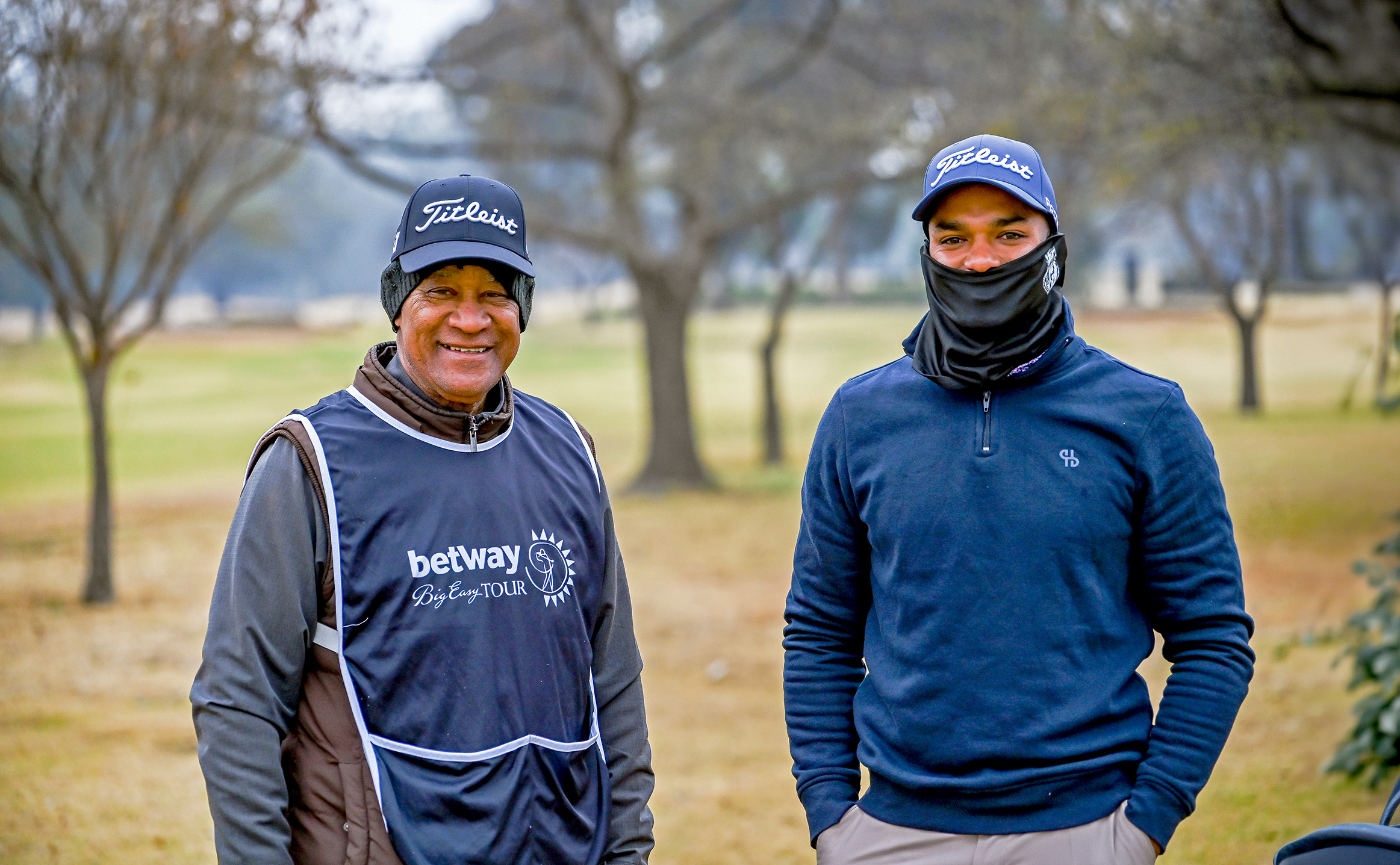
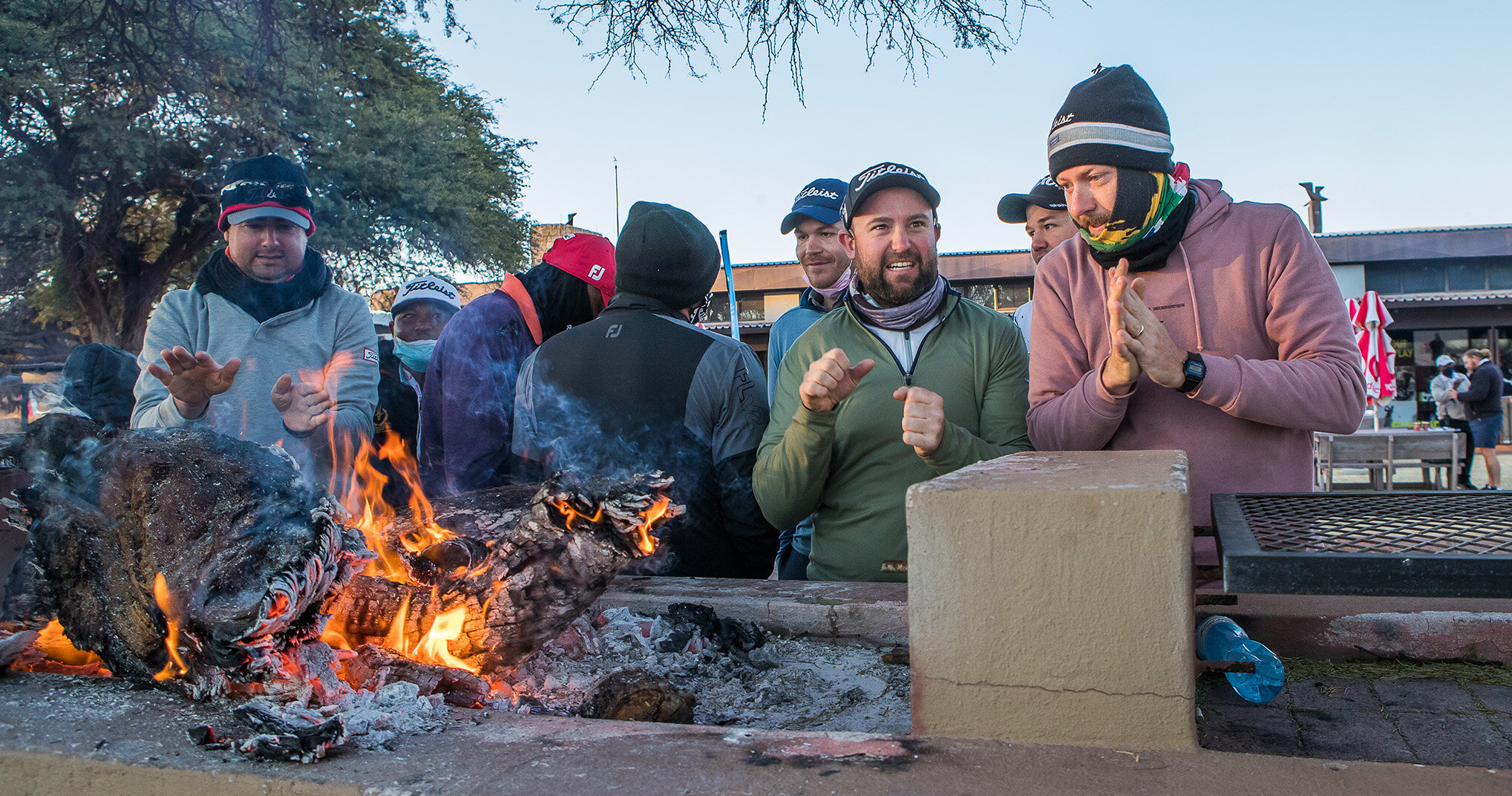
Winter golf isn't just uncomfortable – it's physiologically different. In an ideal world we would just tee off later, but unfortunately we can't all have the 11.15am tee time, so at some point we will find ourselves on the first tee at 7.15am in the middle of winter.
If you feel stiff on the first tee on a cold morning, it's not just perception. Your body is operating below its normal capacity. Muscle temperature is lower, your nervous system is slower, and your ability to produce speed and co-ordinate movement is compromised before you've even hit a shot.
Understanding what's happening is the first step. Preparing for it is what separates a frustrating round from a functional one. Cold weather affecting your swing is real!
When muscle temperature drops, mobility and speed go with it. When your body is cold: Muscle elasticity decreases. Joint range of motion tightens. Force production is reduced.
In golf terms, that shows up as: A shorter or more restricted backswing; less separation between hips and torso; and a noticeable drop in clubhead speed, and thus driving distance.
You're effectively trying to make a full, dynamic golf swing with tissue that isn't ready to move dynamically.
THE ISSUES
1 Compromised Nervous System
A reduced (slowed down) nervous system is the hidden factor most golfers don't consider. Cold conditions reduce: Motor nerve conduction speed; coordination and timing; and efficiency of movement sequencing.
On the course, that can feel like poor rhythm, and getting 'stuck' in transition as well as inconsistent strike patterns.
It's not just that your body feels slow – your timing is genuinely off. The danger with this is that you think it might be a swing technique issue, and start attempting to 'fix' what isn't actually broken, it's just a symptom of the weather conditions.
2 Cold Hands Lose Feel
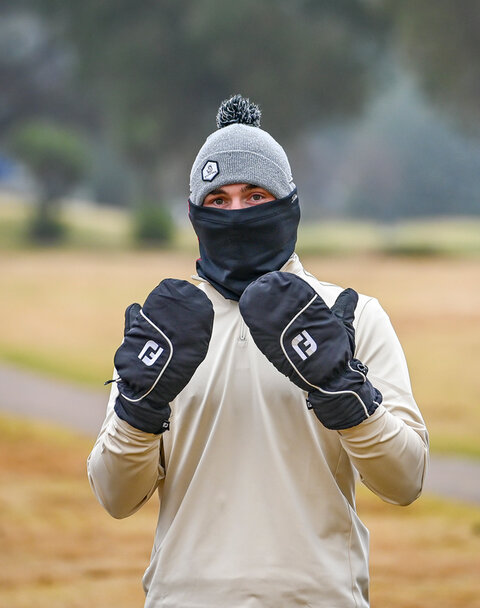
As temperatures drop: Blood flow to the hands reduces, sensory feedback decreases and grip strength feels less reliable. The natural response? You squeeze harder.
That leads to inncreased tension through the arms and shoulders, reduced clubface control and the dreaded 'thin shot' stinging the hands for minutes after and loss of fluidity through impact. Lose the feeling in your hands, and you lose control of the club.
What to do about it? By the time you reach the first tee, your body is either prepared – or already playing catch-up. In winter, preparation isn't optional. It's performance.

Golf is good for your mind
Golf is one of the few sports that exercises the mind as much as the body. Unlike repetitive exercise, no two golf shots are ever exactly the same. This constant variation requires golfers to analyse, calculate and adjust throughout a round, strengthening concentration and mental processing skills. A National Institute of Health study found golf enhances and sharpens focus and attention, as well as increases blood flow to the brain.
Experts have also noted that the game activates areas of the brain linked to planning, memory and coordination, making golf an excellent lifelong activity for maintaining cognitive engagement. (National Geographic)
THE SOLUTIONS
1 Start Before You Arrive
Turning up cold and expecting a few range balls to fix it is one of the biggest mistakes golfers make in winter. Even 5-10 minutes of movement before you leave home can make a noticeable difference. The goal is simple: raise your core temperature and get joints moving early. Arrive warm, not cold.
Begin at home by doing bodyweight squats, torso rotations and arm swings.
2 Extend and Upgrade Your Warm-Up
If you've read my previous column on warm-ups, you'll know the structure: mobility → activation → speed. In winter, that structure doesn't change, but the emphasis does. You're not just loosening up, you're trying to change your body state.
Therefore, warm up for for 15–20 minutes (minimum). Keep it continuous: avoid standing around or long static stretches. Start by generating heat, not just stretching. Do brisk walking, light bouncing or skipping movements, and dynamic full-body patterns.
3 Activate Before You Accelerate
Cold conditions make it harder for key stabilisers to 'switch on', particularly glutes, core, upper back and shoulder stabilisers. If these aren't engaged, the body compensates, movement becomes inefficient and injury risk increases. Simple activation drills before you hit balls can go a long way toward restoring proper sequencing.
4 Reintroduce Speed
Don't skip this step! A common winter mistake is staying slow for too long. Golfers tend to chip, hit a few half shots and then go straight to the course. The problem: The nervous system hasn't been exposed to speed.
Before you finish your warm-up: Gradually build to full swings. Include a few swings at near full intent. You don't need volume, you need exposure. You don't find speed on the course, you bring it with you.
5 Dress for Performance, Not Just Warmth
Layering is essential, but it needs to be done correctly, and it gives you a valid reason to go check out the latest winter fashion at your local pro shop! Wear a base layer (retains heat), a mid layer (insulation) an an outer layer (protection from wind and rain).
The key is avoiding restriction, so going with thermal thinner layers will give you the desired result without feeling like a proverbial Michelin Man. If your clothing limits your ability to rotate, it will cost you more than the cold itself.
6 Stay Warm Up To The First Tee
What you do in the final minutes before you hit your first shot matters more than most realise. Keep your hands warm. Avoid standing still for long periods. Stay lightly active while waiting. Those few minutes can determine whether you start the round ready – or chasing your swing.

CLOSING THOUGHT
Cold conditions don't just make golf harder, they change what your body is capable of doing. Get your preparation right, and you give yourself a chance to perform close to normal. Get it wrong, and you're trying to solve a physical problem with technical fixes for the next four hours.
Next month, we'll look at how to maintain that performance once you're out on the course.
About the author
Gavin Groves graduated in biokinetics from the University of Pretoria in 2007 and started working as a golf fitness professional at the World of Golf. A year later, he started his journey with the Titleist Performance Institute. He is also an AA-member of the PGA of South Africa. He joined the University of Pretoria's High Performance golf programme in 2013. In 2018, he moved to the DP World Tour, while he also counts numerous past and present Sunshine Tour professionals as clients. He has been the full-time fitness consultant of the GolfRSA National Squad since 2017 and worked with some of the best SA amateur golfers.
Gavin Groves graduated in biokinetics from the University of Pretoria in 2007 and started working as a golf fitness professional at the World of Golf. A year later, he started his journey with the Titleist Performance Institute. He is also an AA-member of the PGA of South Africa. He joined the University of Pretoria's High Performance golf
Gavin Groves graduated in biokinetics from the University of Pretoria in 2007 and started working as a golf fitness professional at the World of Golf.
A year later, he started his journey with the Titleist Performance Institute. He is also an AA-member of the PGA of South Africa. He joined the University of Pretoria's High Performance golf
programme in 2013. In 2018, he moved to the DP World Tour, while he also counts numerous past and present Sunshine Tour professionals as clients. He has been the full-time fitness consultant of the GolfRSA National Squad since 2017 and worked with some of the best SA amateur golfers.

About the author
Dr Kirsten van Heerden represented South Africa at swimming and holds a PhD in sport psychology. She has worked and travelled extensively within high performance sport for more than 15 years. She has authored a book, Waking From the Dream, on the challenges athletes face when they retire from elite sport. In her podcast ‘Behind the Dream’ she talks with some of the world’s best athletes about the ups and downs of being a professional athlete. She is also the founder and chairperson of Girls Only Project – a non-profit company focusing on women in sport issues. She is in private practice at Newton Sports Agency.




About the author
Dr Kirsten van Heerden represented South Africa at swimming and holds a PhD in sport psychology. She has worked and travelled extensively within high performance sport for more than 15 years.She has authored a book, Waking From the Dream, on the challenges athletes face when they retire from elite sport. In her podcast ‘Behind the Dream’ she talks with some of the world’s best athletes about the ups and downs of being a professional athlete. She is also the founder and chairperson of Girls Only Project – a non-profit company focusing on women in sport issues. She is in private practice at Newton Sports Agency.
Dr Kirsten van Heerden represented South Africa at swimming and holds a PhD in sport psychology. She has worked and travelled extensively within high performance
sport for more than 15 years.She has authored a book, Waking From the Dream, on the challenges athletes face when they retire from elite sport. In her podcast ‘Behind the Dream’ she talks with some of the world’s best athletes about the ups and downs of being a professional athlete. She is also the founder and chairperson of Girls Only Project – a non-profit company focusing on women in sport issues. She is in private practice at Newton Sports Agency.

TYRONE WINFIELD | DEON VAN DER MERWE | SUNSHINE TOUR