
MIND & BODY
staying the
COURSE
In the final part of this two-part lifestyle series, GAVIN GROVES explains why hydration and nutrition are important over 18 holes
By GAVIN GROVES

Last month we focused on the benefits of walking, probably the way this great game was intended to be enjoyed! South African courses can be challenging, and 18 holes is not exactly a passive recreation: it is a genuine physical demand that is just subtle enough that many golfers only notice it when their energy and concentration begin to fade after the turn.
Here we explore the hydration, fuel, and recovery for golfers who choose to walk. Preparing the body to walk is powerful, but even excellent fitness can unravel surprisingly quickly without two essential support systems: fuel and hydration.
When golfers fade over the closing holes, the cause is rarely dramatic. More often, it is a slow, and predictable, decline in fluid balance, blood sugar, and mental clarity – changes that are subtle enough to ignore, yet significant enough to influence scoring.
In South African conditions, where heat and distance quietly accumulate, that decline can arrive sooner than expected.
The Back Nine Reveals Everything
The later holes of a round tend to expose preparation. Decision-making becomes rushed, concentration drifts, and swing tempo either speeds up or loses structure. While this is often blamed on technique, physiology is often the quiet truth behind the scenes.
Mild dehydration alone can reduce focus, co-ordination, and emotional control. Under-fuelling gradually lowers blood sugar, leading to mental fog and poorer club selection. Add several kilometres of walking in warm weather, and fatigue becomes almost inevitable – unless it is planned for.
The reassuring reality is that each of these factors is simple to manage.

Hydration Supports Clear Thinking
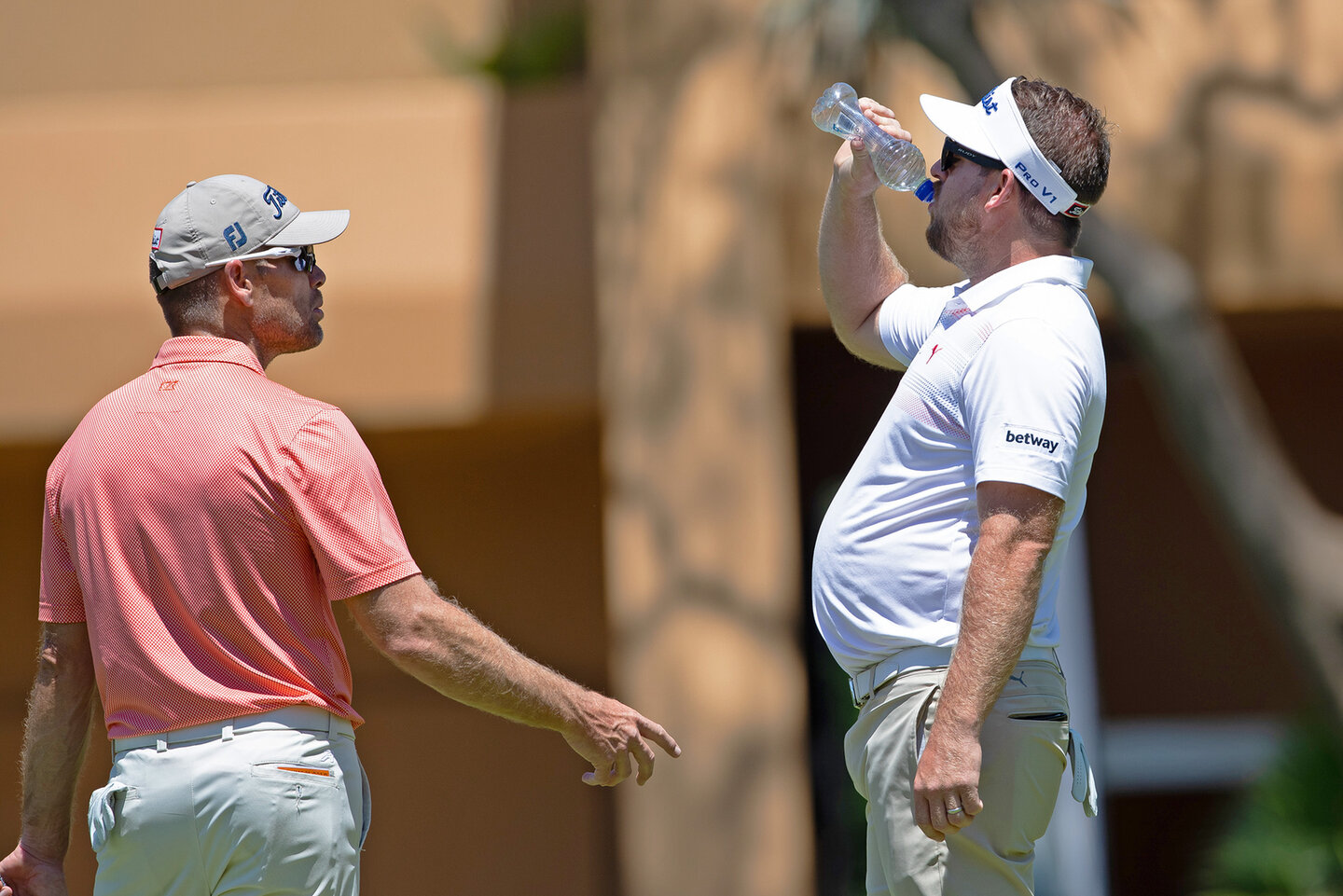
Effective hydration is less about how much you drink at the halfway house, and more about steady intake throughout the round. Beginning play already well hydrated, then sipping fluids regularly – typically somewhere in the region of 400 to 800 millilitres per hour, adjusted for temperature – keeps both body and mind operating smoothly.
In warmer conditions, including an electrolyte drink can help replace the sodium lost through sweat and reduce the likelihood of late-round fatigue or cramping. Nothing complicated is required, just quiet consistency.

GOLF IS GOOD FOR YOUR HEART
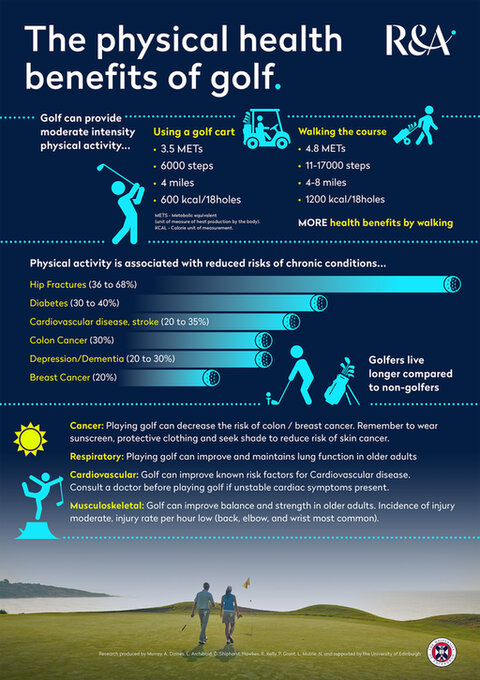
According to the Harvard Medical School, a small, randomised study showed that walking an 18-hole golf course on foot (pulling golf clubs) seemed to have slightly better effects on a person’s blood sugar and cholesterol in the short term versus a one-hour brisk walk or one hour of Nordic walking (walking in snow with poles). The scientists reasoned it was because of the game’s long duration and the extra energy required to drag the clubs around the course. They stated that golf burned twice as many calories as the other walking activities. Read more HERE.
Golf is Good for Your Heart and we encourage everyone to make it their #HealthyHabit for April and burn more calories.
Fuel Keeps Energy Stable
Golf may not feel as demanding as endurance sport, yet four to five hours of walking and swinging still require reliable energy. The aim is not to eat more, but to avoid the gradual dip that turns patience into frustration.
A light pre-round meal, containing easily-digested carbohydrate with a little protein – oats and yoghurt, toast and eggs, or fruit with nuts – provides a steady starting point without heaviness.
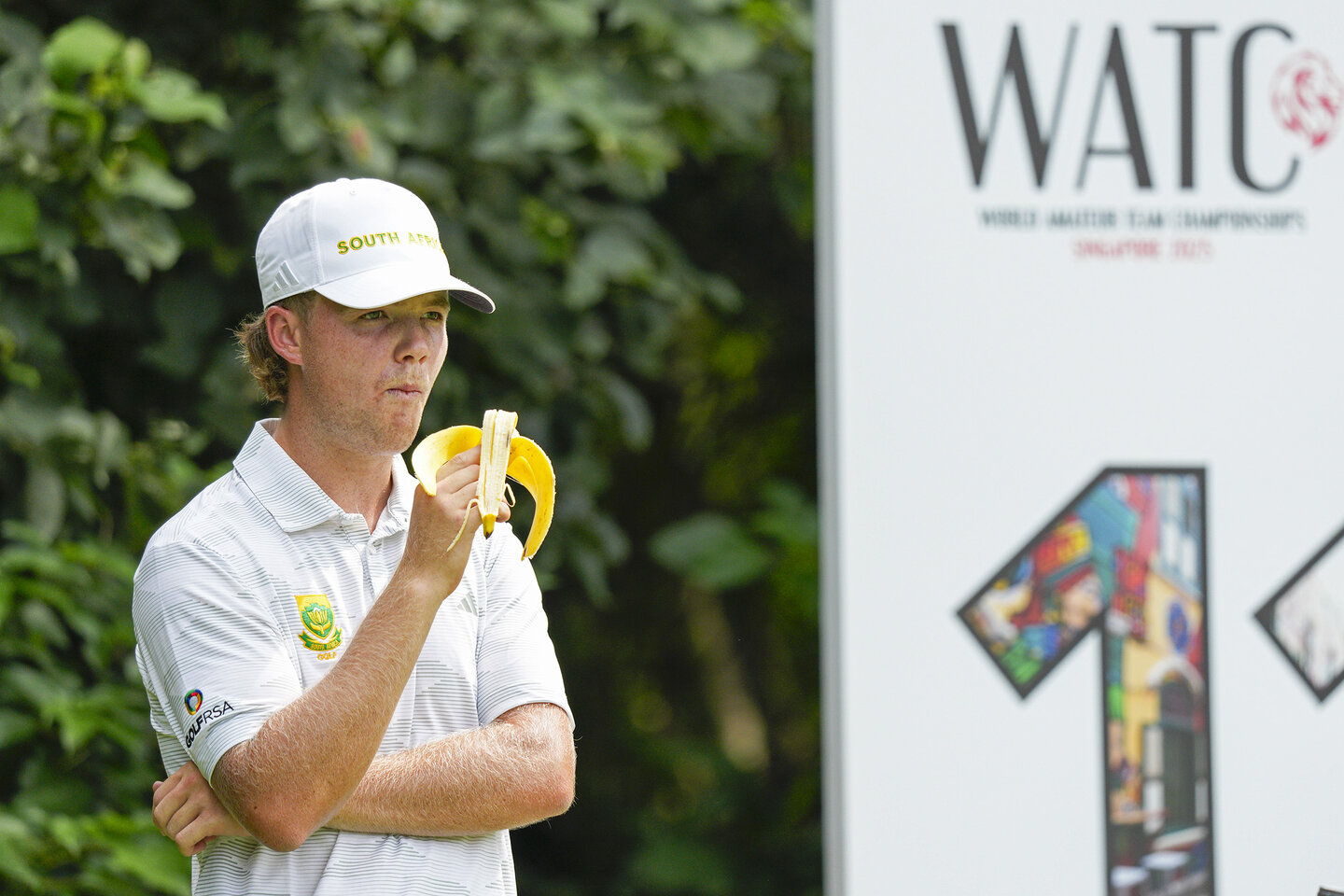
Out on the course, small amounts of simple food every few holes are far more effective than eating nothing and hoping concentration holds. Fruit, nuts, or biltong all work well, but one of the most practical options is also one of the simplest: cold mini-potatoes seasoned with salt and pepper. They are easy to pack, gentle on the stomach, naturally rich in carbohydrate, and far lower in sugar than many commercial snack bars. Quietly, they provide exactly what walking golfers need – steady energy without the spike and crash. There is a reason they are a staple at water tables for endurance running and cycling events.
The common halfway-house pattern of sugary drinks and heavy fried food often delivers the opposite, producing a brief lift followed by a sharper drop over the closing stretch.
THE BENEFITS IN SUMMARY
- Most back-nine mistakes begin long before the back nine
- Dehydration doesn't feel dramatic — it just quietly costs you shots
- Stable energy beats sugary spikes every time
- Cold mini-potatoes might be the most underrated snack in golf
- The goal isn't simply to finish 18 holes — it's to arrive at the last tee still fully yourself
- Preparation turns survival golf into scoring golf
- In the end, walking well is just another way of playing the game completely
Using the Walk as a Performance Tool
Well-conditioned golfers don't merely tolerate the walk between shots; they use it. A steady walking rhythm regulates breathing and heart rate, while the time between shots creates space to reset emotionally and refocus on the next decision. Even simple choices around bag weight and comfort can preserve energy for the swing itself.
Far from slowing the game down, walking often produces clearer, calmer golf.
Recovery Prepares the Next Round
Performance doesn't end at the eighteenth green. Rehydrating over the next few hours, eating a balanced meal containing protein and carbohydrate, and keeping the body gently moving later in the day, all support faster recovery and reduced stiffness. No elaborate routines are necessary – only consistent habits.
Returning to Golf's Natural Rhythm
Walking golf is not nostalgia, nor resistance to modern convenience. Instead, it is a quiet recognition that something valuable still lives in the game's original rhythm: step by step across real ground, time to think between shots, and a finish that rewards preparation as much as talent.
Perhaps that is why golfers who walk well so often finish well. Not because walking is harder, but because it asks the player to be more complete.
And in that completeness, the game feels a little closer to what it was always meant to be.
About the author
Gavin Groves graduated in biokinetics from the University of Pretoria in 2007 and started working as a golf fitness professional at the World of Golf. A year later, he started his journey with the Titleist Performance Institute. He is also an AA-member of the PGA of South Africa. He joined the University of Pretoria's High Performance golf programme in 2013. In 2018, he moved to the DP World Tour, while he also counts numerous past and present Sunshine Tour professionals as clients. He has been the full-time fitness consultant of the GolfRSA National Squad since 2017 and worked with some of the best SA amateur golfers.
Gavin Groves graduated in biokinetics from the University of Pretoria in 2007 and started working as a golf fitness professional at the World of Golf. A year later, he started his journey with the Titleist Performance Institute. He is also an AA-member of the PGA of South Africa. He joined the University of Pretoria's High Performance golf
Gavin Groves graduated in biokinetics from the University of Pretoria in 2007 and started working as a golf fitness professional at the World of Golf.
A year later, he started his journey with the Titleist Performance Institute. He is also an AA-member of the PGA of South Africa. He joined the University of Pretoria's High Performance golf
programme in 2013. In 2018, he moved to the DP World Tour, while he also counts numerous past and present Sunshine Tour professionals as clients. He has been the full-time fitness consultant of the GolfRSA National Squad since 2017 and worked with some of the best SA amateur golfers.

About the author
Dr Kirsten van Heerden represented South Africa at swimming and holds a PhD in sport psychology. She has worked and travelled extensively within high performance sport for more than 15 years. She has authored a book, Waking From the Dream, on the challenges athletes face when they retire from elite sport. In her podcast ‘Behind the Dream’ she talks with some of the world’s best athletes about the ups and downs of being a professional athlete. She is also the founder and chairperson of Girls Only Project – a non-profit company focusing on women in sport issues. She is in private practice at Newton Sports Agency.




About the author
Dr Kirsten van Heerden represented South Africa at swimming and holds a PhD in sport psychology. She has worked and travelled extensively within high performance sport for more than 15 years.She has authored a book, Waking From the Dream, on the challenges athletes face when they retire from elite sport. In her podcast ‘Behind the Dream’ she talks with some of the world’s best athletes about the ups and downs of being a professional athlete. She is also the founder and chairperson of Girls Only Project – a non-profit company focusing on women in sport issues. She is in private practice at Newton Sports Agency.
Dr Kirsten van Heerden represented South Africa at swimming and holds a PhD in sport psychology. She has worked and travelled extensively within high performance
sport for more than 15 years.She has authored a book, Waking From the Dream, on the challenges athletes face when they retire from elite sport. In her podcast ‘Behind the Dream’ she talks with some of the world’s best athletes about the ups and downs of being a professional athlete. She is also the founder and chairperson of Girls Only Project – a non-profit company focusing on women in sport issues. She is in private practice at Newton Sports Agency.

EJ LANGNER | SUNSHINE TOUR