
VIRTUAL ROUNDTABLE
Talking
HEADS
As we came to the end of 2025, we sat down for a varied discussion with some of South Africa’s influential figures

Our ROUNDTABLE GUESTS
Our four panellists were given the same questions and asked to provide answers with a strict word count.
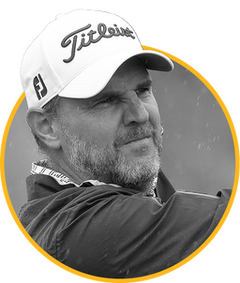
Thomas Abt
Sunshine Tour commissioner
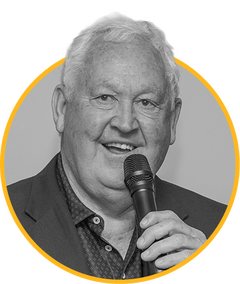
Dale Hayes
Media personality
and businessman
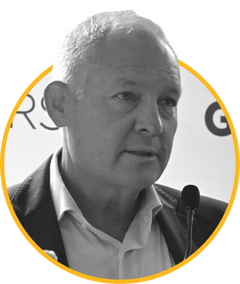
Grant Hepburn
GolfRSA
CEO
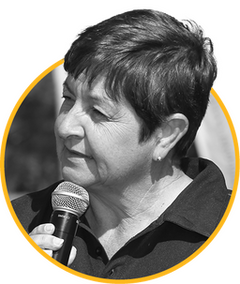
Barbara Pestana
Former pro turned administrator
Many golf courses closed in SA in 2025. Is this an escalating problem, or does SA have enough golf courses regardless?
Thomas Abt: It’s not just a question of enough golf courses. I see it as whether we can keep sustaining the growing appetite for the game and providing a great golf experience, from the weekend golfer to our elite amateurs and then to us as a Tour and our professionals.
Dale Hayes: The closing of golf courses is always sad. Great clubs and courses like Kensington in Johannesburg, King David in Cape Town and even Randfontein, Stilfontein and Blyvooruitsig. The members are left devastated and have to find a new club. Now we have King David Mowbray, East London Golf Club, Killarney and others that are at risk. Leave the clubs alone – they bring in taxes, give jobs and give us green belts.
Grant Hepburn: It is an issue and one that we are aware of. Golf courses serve a purpose beyond the playing of golf, they support communities through providing a social space and gathering point. They create manicured areas within suburbs that are visually appealing and properly maintained and they uphold a level of beauty that is difficult to maintain. So any time a golf course closes down it is a loss that is not replaceable.
Barbara Pestana: Sadly, some traditional golf clubs close due to them being unsustainable financially. In some instances, municipal land can be better utilised for housing needs closer to work opportunities. Change is inevitable and strategically sometimes outdated club management models need to be revised so that they can be run as fully-fledged profitable businesses. This is where the golf estates have come into their own.
Given the advances in equipment and distances pros hit the ball, why are we not seeing more 59s on the major tours?
TA: From a Tour perspective, that also speaks to the quality of the competition on our Tour and the pressure that comes when a player is in contention and trying to win a tournament. Ask any of our professionals and they’ll tell you that winning a golf tournament on the Sunshine Tour is hard.
DH: The players today are hitting the ball ridiculous distances but it still takes one shot to reach a par three, two to reach a par four and often still three shots to reach a par five. So it boils down to accuracy and good putting.
GH: The psychology of posting a low score and making the putts necessary to do so is still a reality. Breaking 60 is a psychological barrier that causes tension and nerves as much today as it ever has. That's probably the reason that it still remains such a barrier, despite the equipment advances.
BP: At the professional level, distance is not everything. A good championship course allows for a varied set up, so there are other ways of providing a good test of golf. Modern courses take this into account when designing the layouts with additional bunkering, narrower fairways, more slope and speed in greens in providing a good test of golfing ability and skills.
The next big rules update is next year. If there was one rule you'd want added or one removed, what would it be?
TA: A mulligan on the first hole for golfers like myself.
DH: I would allow range finders for all golfers, including the pros. The second change would be to disallow players or caddies straddling the line of a putt for a distance of one metre from the hole.
GH: These days I wish I was allowed to throw it out of a bunker after the second try!
BP: Free relief from divots on fairways.
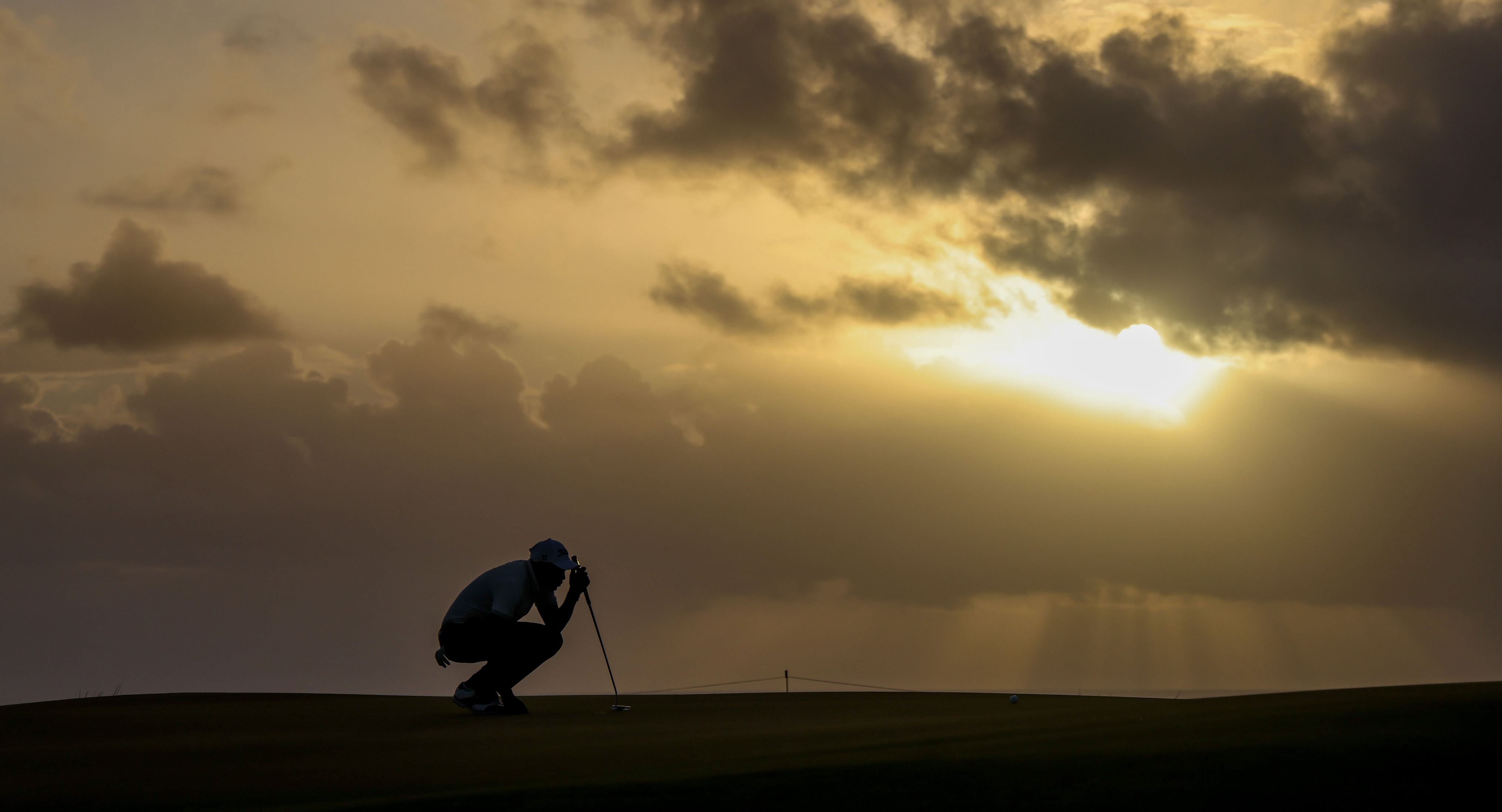
When it comes to the television and broadcasting experience, what would you like added to make it even more enjoyable?
TA: As the Sunshine Tour we will be enhancing our broadcasts in 2026 with a greater emphasis on stats and individual player stats, through our new partnership with Altron. So our viewers and fans will be given even greater insight into our players’ performance.
DH: There are too many commercial breaks on the PGA Tour coverage. I also don’t enjoy the speeded-up coverage where you see shot after shot. Watching golf should be relaxed, seeing beautiful pictures and good commentary which the DP World Tour provide.
GH: It's a pity that people can't see slope and elevation on TV. Augusta is a perfect example of this. When you arrive there, you are not only struck by the beauty of the place but also the hills and valleys and sheer changes in elevation. When you see that, you start to really appreciate how skilled the players are. And that goes for many golf courses that we see on TV.
BP: Like with everything else, things must evolve and move with the times. I would like to see more interaction with the players, all players and not just the top ones. Learn more about them, how they are helping and what they are giving back to the game.
Gone are the days when men wore collar and tie and women wore dresses. Where do you draw the line with golf gear?
TA: On the Sunshine Tour we have our dress regulations, but by and large golfers are quite sensible when it comes to attire. Golfers want to dress well and look good, and our Tour pros set a great tone for cutting-edge fashion that remains acceptable in the greater context of the game.
DH: My father would not believe how people dress at golf clubs in 2025, but times change. I have no problem with pro's wearing shorts, although I would never wear them to play golf myself.
GH: Many courses are relaxing their dress code to encourage people to play without having to worry too much about what they wear. I think it's about creating a balance between being overly strict and maintaining a respectful appearance. But ultimately it's up to the golf course – some don't mind having a relaxed dress code while others pride themselves on being particular about people dressing according to traditional means.
BP: Dress codes have relaxed in all spheres and the same applies to golf. Fashions come and go and allowances need to be made to keep attracting participants to the game. Personally, I would prefer collared golf shirts and 'Chino style' shorts or longs for men and smart casual for women.
Social media and 'screens' is part of everyday life. What is your opinion on phones being used on the golf course?
TA: On our Tour our professionals are not allowed to use their phones during a round, but as for the fans, I love it. The closer we bring the fans into our world the better. I think we’ve done a good job educating fans on phone etiquette at tournaments. But this is our world now, and we need to embrace it. At a social golf level, as long as my Saturday social playing partner doesn’t use his phone for meetings or unnecessary calls during a round, I think it’s good for our game.
DH: I don’t like the use of phones on the golf course, with the exception of doctors or any other emergency. I would just ask the person to be aware and stay away from golfers who are playing shots.
GH: It's fine as long as you aren't disturbing anybody else that's playing. It's about being respectful and discreet.
BP: I am interpreting this question from an operations and technological aspect and if it assists to speed up play from a yardage point of view then great. In the future scores will be captured on phones and the physical pen and paper cards will be superseded. The ethos of golf is that it is self-regulating, and any actions must be respectful to and mindful of fellow players.
Golf is perhaps the only sport where the consumption of alcohol is allowed while competing. Should there be more regulations as to that consumption?
TA: Our Sunshine Tour regulations prohibit our professionals from consuming alcohol during a round. As for golf clubs and their membership, that is entirely up to them to decide.
DH: Although there is no rule that prohibits players from consuming alcohol on the Tour, it would be frowned upon and the player would be disciplined. Golf is a hard enough game played sober.
GH: Most clubs and professional golf tours do have some restriction or parameters around this and I think that's a good thing.
BP: As it is part of the enjoyment for some, moderation is key, and as above, must be respectful to and mindful of fellow players.
Pick a dream fourball – you can drive the cart and enjoy their company!
TA: My late father will always be in my fourball. Then I’d go with Winston Churchill as an insight into his leadership ability. And Florence Nightingale, because I’ve always been inspired by her self-sacrifice for her fellow human beings.
DH: Nick Mallet, Johann Rupert, Cyril Ramaphosa and Trevor Manuel.
GH: Through my coaching background I've had the privilege of playing with or coaching many public figures. A particular privilege is playing with Johann Rupert who has done so much for me and so many others. Because I've been lucky enough to have those experiences I'm going to say that apart from him and Gaynor Rupert, I look forward to playing golf with my wife and two sons (aged 7 and 3). Golf is such an incredible game for families to enjoy together.
BP: Cyril Ramaphosa, Magda Wierzycka, Johann Rupert and Basetsana Khumalo.
The rule is 14 clubs in a bag. Reduce your bag to 10 without affecting your game.
TA: Take out the four longest clubs in your bag. In that way all golf courses would be long enough and the debate around golf ball going too far would end.
DH: If they reduced the number of clubs to 10, my set make-up would be: Driver, 3-Wood, Hybrid, 5-, 7-, 8- and 9-irons, a 48° wedge, a 58° sand wedge and a putter. I have never liked a 6-iron.
GH: I would take out the driver, 4-iron, and two of my four wedges.
BP: Correction, the rules currently allow for 'not more than' 14 clubs, so it could be less if preferred.
TYRONE WINFIELD | EJ LANGNER | SHAUN ROY | SUNSHINE TOUR | SUNSHINE LADIES TOUR | GOLFRSA