
MIND & BODY
Ready, Set,
GO!
Another new year, but the same resolutions made … and then broken? This is how to break the cycle
By GAVIN GROVES

January arrives with overflowing driving ranges, packed gyms, and ambitious declarations: 'This is the year I’ll get fit, lose weight, hit it further, practise more, and finally reach my potential.'
And by late February, most golfers feel frustrated as old habits return and the New Year’s resolution spark fades.
It’s not a motivation problem. It’s a system problem.
Too many golfers try to overhaul everything at once: Strict diets, daily training, major swing changes, and new routines. Life gets busy, the plan collapses, and the golfer assumes they failed. But the plan was never realistic to begin with.
This year, instead of resolutions, build a system that makes progress automatic, sustainable, and nearly inevitable – one built on consistency, structure, small wins, and measurement. It's what the professionals do, and those principles can be applied to your game too.
Consistency Beats Intensity
If you trained three times a week for the full year, that will be:
- More than 150 training sessions
- Thousands of technical reps
- A stronger, more powerful and more resilient body
Even moderate training performed consistently will outperform any six-week January sprint.
A simple three-session-per-week structure works beautifully:
- Strength and foundation work
- Power and speed development
- Conditioning and mobility
It’s manageable, flexible, and fits real life.
Quick Assessment Metrics to Track Quarterly
- Clubhead speed
- Power tests
- Repeatable strength tests (think push, pull, leg strength)
- Mobility screen results
- Conditioning score (e.g. bike or row test) anthropometric / health measurements / bloods with a doctor
Tracking progress keeps training purposeful – and proves the system is working.

'Three smart sessions a week for 12 months will outperform six sessions a week for six weeks – every time’
Measure What Matters
Professionals assess their performance – everyday golfers should too.
Visiting a fitness or strength professional every 12 weeks allows you to:
- Establish a measurable baseline
- Track mobility, strength, power, speed, and conditioning
- Identify areas holding your swing back
- Adjust your program intelligently
- Stay motivated through visible progress
Numbers don’t lie. When clubhead speed, vertical power, rotational strength, or conditioning scores improve, commitment becomes easy. You’re not guessing anymore – you’re improving.
A Year-Long Golf Performance Plan
Instead of a January explosion followed by a February collapse, follow a structured progression, just like elite athletes.
Month 1 – Foundations
Master movement quality, restore mobility, and establish consistent training habits.
Months 2-3 – Muscle Endurance & Base Strength
Higher reps, controlled tempo, and joint-friendly loading prepare the body for heavier work later.
Months 3-4 – Hypertrophy (Muscle Building)
Add functional muscle to improve force production, rotation, and stability in the swing.
Months 5-6 – Max Strength
Lower reps, heavier loads. Stronger muscles protect joints and form the engine that later becomes power.
Months 7-8 – Power Training
Medicine-ball throws, explosive work, kettlebell swings, and jump variations convert strength into usable athletic power.
Months 9-10 – Speed Work & Golf Transfer
Over-speed tools, rotational speed training, and on-range application often deliver significant gains in clubhead speed.
Months 11-12 – Maintenance
Strength and power are preserved through 2-3 shorter sessions per week while competition increases. This prevents losing all the gains built earlier in the year.

This Year, Skip the Resolutions
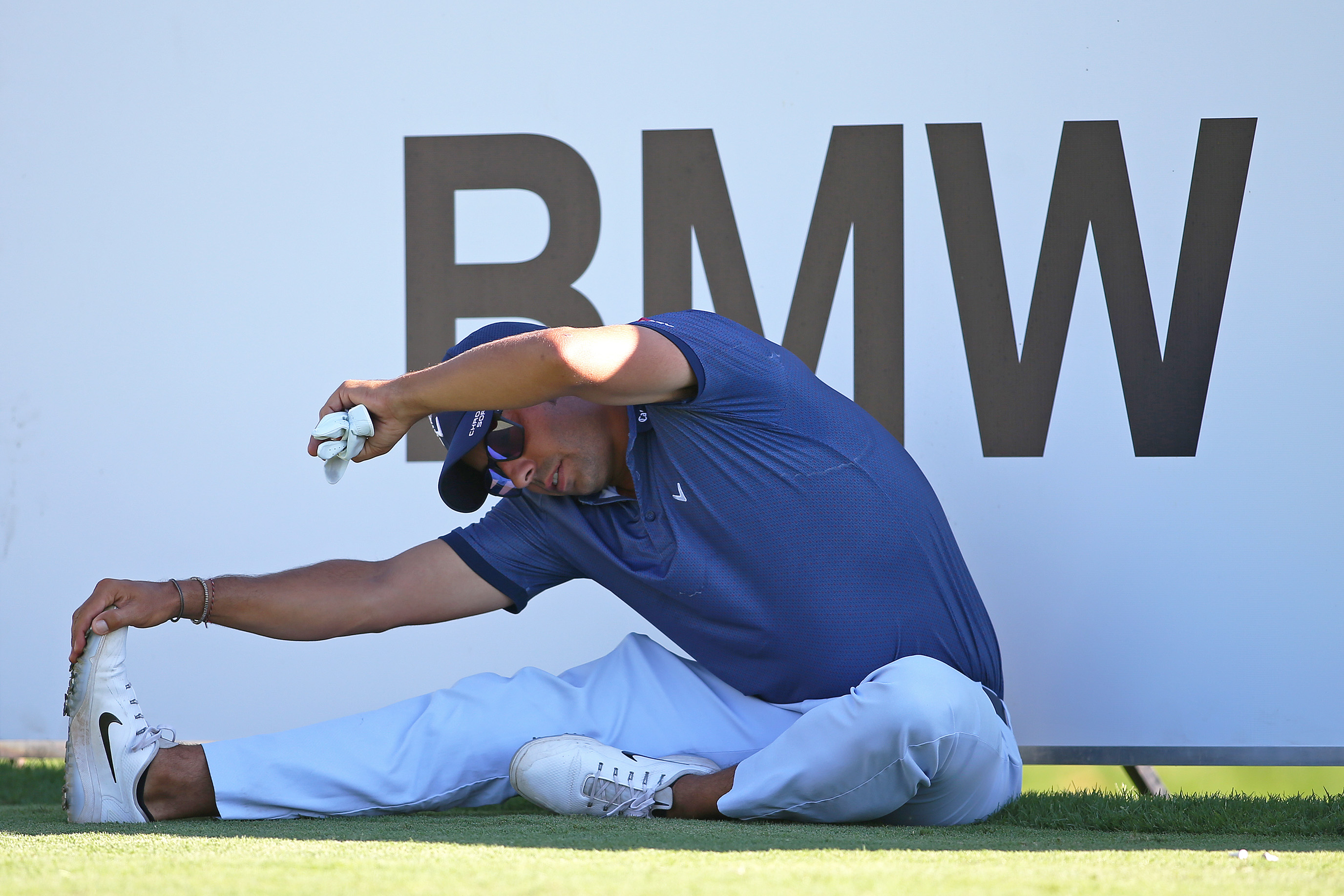
No extreme changes. No January panic. Do not try to become a new person on New Year’s Day, rather:
- Train three times a week
- Assess every quarter
- Follow a structured annual performance plan
- Improve your nutrition one habit at a time
Golf is a long game. Your training should be too.
One Nutrition Change Per Month
Most golfers try to 'fix their diet' overnight. That rarely lasts. Instead, aim for one habit improvement each month. By December you have 12 upgrades – without the stress.
Examples of diet 'upgrades' include:
January: Eat protein at every meal
February: Add vegetables to two meals a day
March: Drink two litres of water daily
April: Plan snacks ahead of time
May: Reduce liquid calories
June: Alcohol only on planned days
July: Pack on-course performance snacks
August: Add omega-3s weekly
September: Include post-training recovery protein
October: Reduce late-night snacking
November: Add one fruit per day
December: Review and lock in your best habits
No crash diets. No guilt cycles. Just measurable, sustainable improvement.
Small Wins > Big Resolutions
If you improve just one percent per week, the difference over 52 weeks is enormous:
- More distance
- Better conditioning
- Improved body composition
- Fewer injuries
- More confidence on the course
Resolutions rely on motivation. Systems rely on structure – and structure wins every time.
About the author
Gavin Groves graduated in biokinetics from the University of Pretoria in 2007 and started working as a golf fitness professional at the World of Golf. A year later, he started his journey with the Titleist Performance Institute. He is also an AA-member of the PGA of South Africa. He joined the University of Pretoria's High Performance golf programme in 2013. In 2018, he moved to the DP World Tour, while he also counts numerous past and present Sunshine Tour professionals as clients. He has been the full-time fitness consultant of the GolfRSA National Squad since 2017 and worked with some of the best SA amateur golfers.
Gavin Groves graduated in biokinetics from the University of Pretoria in 2007 and started working as a golf fitness professional at the World of Golf. A year later, he started his journey with the Titleist Performance Institute. He is also an AA-member of the PGA of South Africa. He joined the University of Pretoria's High Performance golf
Gavin Groves graduated in biokinetics from the University of Pretoria in 2007 and started working as a golf fitness professional at the World of Golf.
A year later, he started his journey with the Titleist Performance Institute. He is also an AA-member of the PGA of South Africa. He joined the University of Pretoria's High Performance golf
programme in 2013. In 2018, he moved to the DP World Tour, while he also counts numerous past and present Sunshine Tour professionals as clients. He has been the full-time fitness consultant of the GolfRSA National Squad since 2017 and worked with some of the best SA amateur golfers.

About the author
Dr Kirsten van Heerden represented South Africa at swimming and holds a PhD in sport psychology. She has worked and travelled extensively within high performance sport for more than 15 years. She has authored a book, Waking From the Dream, on the challenges athletes face when they retire from elite sport. In her podcast ‘Behind the Dream’ she talks with some of the world’s best athletes about the ups and downs of being a professional athlete. She is also the founder and chairperson of Girls Only Project – a non-profit company focusing on women in sport issues. She is in private practice at Newton Sports Agency.




About the author
Dr Kirsten van Heerden represented South Africa at swimming and holds a PhD in sport psychology. She has worked and travelled extensively within high performance sport for more than 15 years.She has authored a book, Waking From the Dream, on the challenges athletes face when they retire from elite sport. In her podcast ‘Behind the Dream’ she talks with some of the world’s best athletes about the ups and downs of being a professional athlete. She is also the founder and chairperson of Girls Only Project – a non-profit company focusing on women in sport issues. She is in private practice at Newton Sports Agency.
Dr Kirsten van Heerden represented South Africa at swimming and holds a PhD in sport psychology. She has worked and travelled extensively within high performance
sport for more than 15 years.She has authored a book, Waking From the Dream, on the challenges athletes face when they retire from elite sport. In her podcast ‘Behind the Dream’ she talks with some of the world’s best athletes about the ups and downs of being a professional athlete. She is also the founder and chairperson of Girls Only Project – a non-profit company focusing on women in sport issues. She is in private practice at Newton Sports Agency.

SHAUN ROY | SUNSHINE TOUR | VANESSA LORING