
WHERE ARE THEY NOW?
tony
JOHNSTONE
The next in our series of updates with one of the Sunshine Tour's stars from yesteryear
BY MIKE GREEN
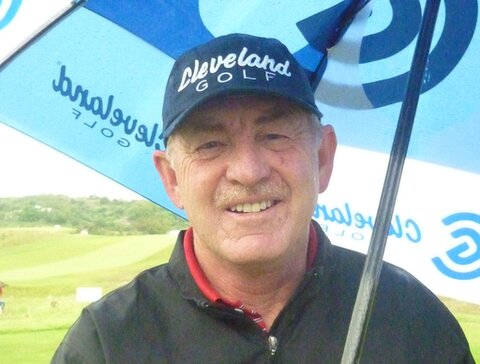
Tony Johnstone remains one of the great delights of watching golf on television.
His encyclopaedic knowledge of the game, his ability to translate that into anecdotes relatable for the average joe, his delight in the birdlife – and other natural phenomena – wherever he goes, and his self-deprecating memories of his own time as one of the best players in the world, all make him a beloved voice in the increasingly frantic world of golf on the box.
From his home in Sunningdale, he points out that Father Time may take him from the airwaves sooner than we – or he – would wish. 'I'm 69 and approaching the age when I should expect to get cut rather than being surprised by it,' he says. 'The modern broadcasting world expects its commentary teams to become more representative, and, while I'm all for that, it often comes at the cost of experience of the game at a level that can't easily be replaced.'
He's speaking just a day before climbing on to a plane for one of his twice-annual trips to the Kruger National Park. 'It's simply the best time for me, every time,' he says.'It gives me the opportunity to be in the bush, to see the birds, the plants, the trees, the animals, and to see them through my camera, which is something else I love to do.
'I've loved nature since I was a boy in Bulawayo. During school holidays, I would be gone early in the morning with my pellet gun, and those times developed an appreciation which has never left me.'
That appreciation is apparent in the banter he shares with other voices of the game, and on social media, where he happily brags about his garden while complimenting friends about theirs.
'When I first moved into Sunningdale, I was something of a "lawnoholic”. I asked my young son whether he wanted a football field or a golf green. He chose a green, and I produced something I was really proud of. The Sunningdale staff were fantastic, helping with some equipment and plenty of advice.
'But now that I don't play much, if at all, I've let it go. But I still love my lawn.'
His playing days were remarkable. He's one of a rare club of players who won the old South African 'Triple Crown' – the SA Open, the SA Masters and the SA PGA Championship, in both 1989 and 1998.
Those six victories were among the 17 Southern African Tour titles he won. He also took six European Tour events and he developed a reputation as one of the best short-game players around – as well as one of the most ill-tempered.
'I'm not proud of that,' he says now. 'I think I was just so competitive, it drove me crazy when things didn't work out.
AS A PLAYER
Reached a career high world ranking of 22 in January 1994
Won six times on the European Tour – the 1984 Portuguese Open, 1990 and 1991 Murphy's Cup, 1992 Volvo PGA Championship, 1998 SA PGA Championship and 2001 Qatar Masters
Won 17 times on the Southern Africa Tour – the first being the 1984 SA Open and 17th the 1998 SA PGA Championship
Twice a winner on the European Senior Tour
Biggest win (OWGR points) – 1992 Volvo PGA Championship at Wentworth
Best finish in a Major – tie 32nd in the 1992 Open Championship at Muirfield
Represented Zimbabwe in the Eisenhower Trophy (amateur) and Alfred Dunhill Cup and World Cup (professional)
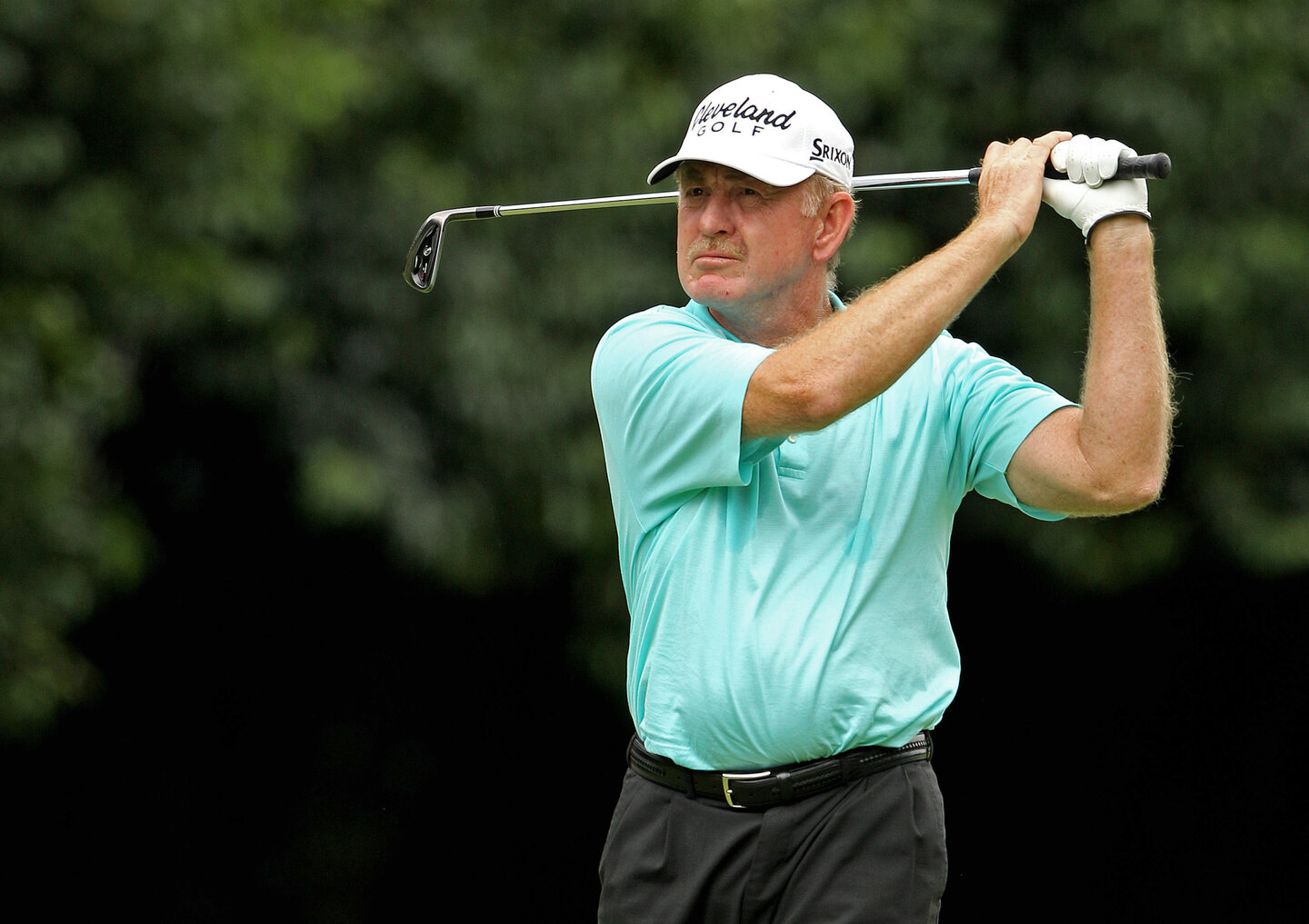
'I was just so competitive, it drove me crazy when things didn't work out'
And it was that which persuaded me to stop playing. I told my wife that the moment I wasn't competitive any more, I'd quit.'
Point out to him that his first local title came at the expense of Fulton Allem, and his last put Ernie Els in the runner-up position, he laughs in return, 'It was probably small man syndrome. I had to prove myself against guys who were bigger than me.'
That's probably not entirely true. Now that his grandson is expressing an interest in golf, his desire to win remains undimmed. 'There's no way in hell I'll let him beat me,' he laughs. 'And, in case you think that sounds a little off, I believe golf is such an educational sport, in the broadest sense, that victories gained are victories earned, and, when he beats me, it will be forever memorable for him. It was the same for my son, who earned his first win over me despite pleas from my wife for me to go easy on him.'
One thing he doesn't go easy on is the schism in professional golf. 'I've got no problem with people taking the money,' he says. 'What I've got a problem with is the hypocrisy. Don't tell me you want to do it for growing the game, when you're fracturing the game. Don't tell me you're doing it to play less golf, and then whine when you can't play in more tournaments. Man up and live with the consequences.
'I don't think there is anything the breakaway can do in its current format – or even, frankly, with its new 72-hole format – that can make it survive. There are very few players in its ranks who can move the needle, and I don't see that situation getting better.'
For him, the situation not getting any better is emblematic of the modern game. 'When I gave my son his first clubs, he was indignant that they were some Mizuno blades, and not a full set of modern clubs like his friends had.
'I told him it was just tough luck… he could learn to shape the ball and he'd thank me later.
'Well, he did thank me later. We were asked different questions with our upbringing in the game, with the equipment. I don't think modern ways produce as much feel for the game.'
And it's that knowledge, as well as appreciating that knowledge in its context, especially the natural context, that makes Tony Johnstone such a memorable part of our lived experience of the modern game when he's on the broadcast team.
GOLFRSA | PAULINE VAN TILL | X.COM/TONYJOHNSTONE56