
MIND & BODY
Rest and
RECOVER
Why are great rounds so hard to back up? In the latest of our fitness and health columns, DR KIRSTEN VAN HEERDEN explains the mental side
By GAVIN GROVES

Have you ever played one of the best rounds of your life, only to wonder the following week where it all went? You finally break 90, win a club competition, or walk off the course thinking, 'that's as good as I can play'. Confidence is high. Expectations rise. And yet, the next time out, everything feels heavier. Decisions are slower. Putts don't drop. Your swing feels strangely forced.
It's tempting to assume something has gone wrong – your technique, your focus, your mindset. But what if the real issue isn't your golf at all? What if it's an emotional hangover from performing well?
At professional level, this pattern is obvious. Very few golfers win one week and seriously contend the next. We usually explain it away as travel, media duties, or pressure. All true – but incomplete.
What's often overlooked is the mental and emotional cost of performing well.

A great round doesn't just require good mechanics. It demands sustained attention, constant decision-making, emotional regulation after bad shots, resisting the urge to protect a score, and staying present when the stakes rise. By the end of a big round, your brain hasn't just worked hard – it's been working precisely. That kind of effort is expensive.
Research on mental fatigue – much of it from endurance sport and decision-making science rather than golf – shows that prolonged cognitive effort reduces our ability to sustain attention, regulate emotions, and make good choices.
Athletes who are mentally fatigued often feel physically fine, yet perform worse. They don't lack strength; they lack clarity. Movements feel rushed. Judgement slips. Effort creeps in where ease used to be.
For amateur golfers, a club competition or personal best can create the same relative load. The brain doesn't care whether pressure came from a tour event or your Saturday medal – it only registers how much regulation it had to do.
After a great round, the internal question subtly shifts. Instead of: What's the best shot here? It becomes: How do I not mess this up?
That shift matters.
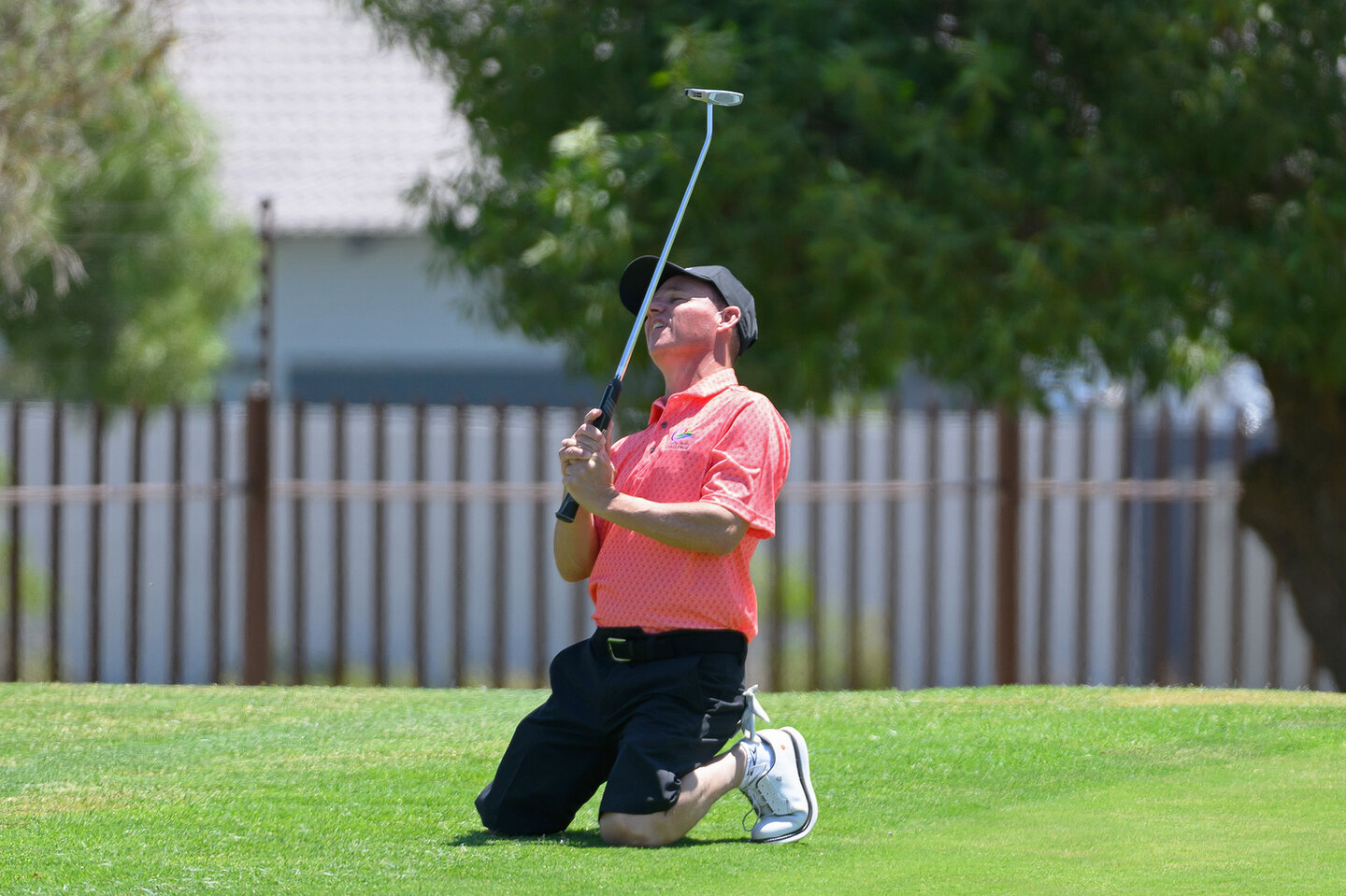
'What's often overlooked is the mental and emotional cost of performing well'
Success raises expectations – especially self-expectations. With that comes self-monitoring: watching your swing, checking your score, comparing today to last week. Attention moves away from execution onto outcome. Ironically, confidence becomes fragile, not because you care less, but because you care more.
Every good round includes bad shots. What separates great rounds from average ones is how quickly you recover emotionally. That recovery takes work: calming frustration, resetting attention, resisting the urge to chase. Do that for four hours and, by the end, your emotional and mental system has been running hard.
Amateurs often assume mental fatigue is a 'pro problem'. It isn't. In fact, club golfers may be more vulnerable because pressure situations are less frequent and big rounds stand out more emotionally. A breakthrough score becomes a reference point the brain keeps checking against.
Instead of playing this round, you're quietly measuring yourself against the last one – draining attention before you've even hit a ball.

Here's the strange truth: the goal after a great round is not to replicate it – it's to recover from it.
That means lowering expectations for the next outing, simplifying decisions, resisting the urge to prove anything, and accepting fluctuation as part of performance – not a sign something has gone wrong. Elite performers manage energy, not just effort. Golfers often chase consistency by tightening control and putting in more effort, exactly when the brain needs space just to relax and recover.
So if you've ever walked off the course wondering why you couldn't back up a great round, the answer may not lie in your swing at all. It may lie in how much effort your brain has already spent getting you there. Golf improvement doesn't move in straight lines; it comes in waves of effort, recovery, and consolidation. When golfers learn to respect that rhythm, pressure eases, expectations soften, and good rounds become less fragile.
Sometimes the most underrated mental skill in golf isn't pushing harder – it's knowing when to let the system reset.
About the author
Gavin Groves graduated in biokinetics from the University of Pretoria in 2007 and started working as a golf fitness professional at the World of Golf. A year later, he started his journey with the Titleist Performance Institute. He is also an AA-member of the PGA of South Africa. He joined the University of Pretoria's High Performance golf programme in 2013. In 2018, he moved to the DP World Tour, while he also counts numerous past and present Sunshine Tour professionals as clients. He has been the full-time fitness consultant of the GolfRSA National Squad since 2017 and worked with some of the best SA amateur golfers.
Gavin Groves graduated in biokinetics from the University of Pretoria in 2007 and started working as a golf fitness professional at the World of Golf. A year later, he started his journey with the Titleist Performance Institute. He is also an AA-member of the PGA of South Africa. He joined the University of Pretoria's High Performance golf
Gavin Groves graduated in biokinetics from the University of Pretoria in 2007 and started working as a golf fitness professional at the World of Golf.
A year later, he started his journey with the Titleist Performance Institute. He is also an AA-member of the PGA of South Africa. He joined the University of Pretoria's High Performance golf
programme in 2013. In 2018, he moved to the DP World Tour, while he also counts numerous past and present Sunshine Tour professionals as clients. He has been the full-time fitness consultant of the GolfRSA National Squad since 2017 and worked with some of the best SA amateur golfers.


About the author
Dr Kirsten van Heerden represented South Africa at swimming and holds a PhD in sport psychology. She has worked and travelled extensively within high performance sport for more than 15 years. She has authored a book, Waking From the Dream, on the challenges athletes face when they retire from elite sport. In her podcast ‘Behind the Dream’ she talks with some of the world’s best athletes about the ups and downs of being a professional athlete. She is also the founder and chairperson of Girls Only Project – a non-profit company focusing on women in sport issues. She is in private practice at Newton Sports Agency.




About the author
Dr Kirsten van Heerden represented South Africa at swimming and holds a PhD in sport psychology. She has worked and travelled extensively within high performance sport for more than 15 years.She has authored a book, Waking From the Dream, on the challenges athletes face when they retire from elite sport. In her podcast ‘Behind the Dream’ she talks with some of the world’s best athletes about the ups and downs of being a professional athlete. She is also the founder and chairperson of Girls Only Project – a non-profit company focusing on women in sport issues. She is in private practice at Newton Sports Agency.
Dr Kirsten van Heerden represented South Africa at swimming and holds a PhD in sport psychology. She has worked and travelled extensively within high performance
sport for more than 15 years.She has authored a book, Waking From the Dream, on the challenges athletes face when they retire from elite sport. In her podcast ‘Behind the Dream’ she talks with some of the world’s best athletes about the ups and downs of being a professional athlete. She is also the founder and chairperson of Girls Only Project – a non-profit company focusing on women in sport issues. She is in private practice at Newton Sports Agency.

ERNEST BLIGNAULT | THINUS MARITZ | GOLFRSA